Cham Dhavi Monument and Lamphun Through a Chiang Mai Vacation Package Lens
A respectful look at Queen Camadevi, Lamphun heritage, and nearby temples for thoughtful regional travel planning
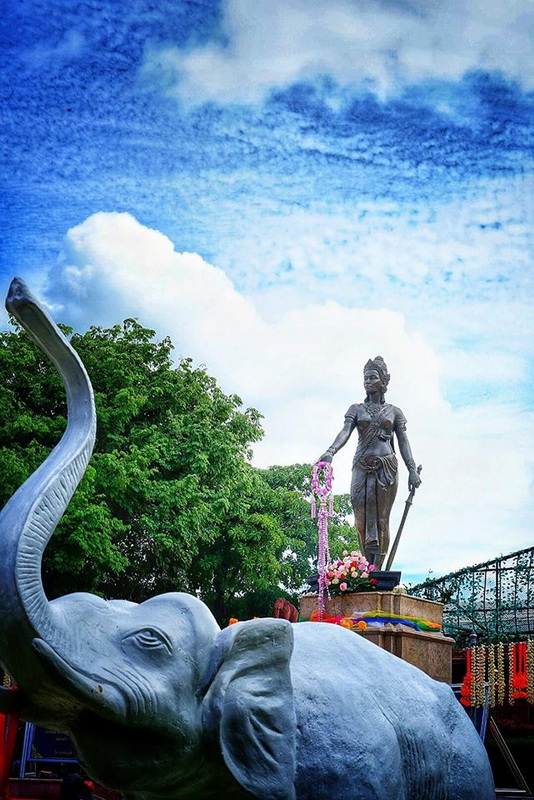
In Mueang Lamphun District, Lamphun, the Cham Dhavi Monument offers a focused introduction to one of northern Thailand’s most important legendary and cultural figures. The monument commemorates Queen Chamadevi, also widely known as Queen Camadevi or Queen Chamthewi, who is traditionally associated with the founding of Hariphunchai, the historic polity centered on present-day Lamphun. For visitors, the site is less about a single photograph than about understanding how memory, local identity, religion, and regional history meet in an urban setting. Lamphun is close enough to Chiang Mai to fit naturally into wider northern Thailand travel planning, yet it has a character of its own. A Chiang Mai Vacation Package may provide a convenient regional framework, but the meaning of a visit depends on allowing time for Lamphun’s quieter streets, temples, monuments, and historical atmosphere. The Camadevi Monument works especially well as an orientation point: it introduces a respected cultural figure before nearby sacred sites add architectural and religious context. This overview considers the monument without treating tradition as a simple, fully documented biography. It also explains what makes Lamphun distinctive and how Wat San Pa Yang Luang and Wat Chamadevi can complement a visit. The result is a cultural travel perspective rather than a fixed itinerary, encouraging observation, courtesy, and curiosity.
A Monument to Queen Camadevi
The Camadevi Monument presents Queen Camadevi in a formal commemorative setting, recognizing her enduring place in Lamphun’s historical memory. Her name appears in several forms, including Chamadevi, Chamthewi, and Camadevi. These variations can make online research seem inconsistent, but they generally refer to the same revered queen in the local historical tradition. Travelers may also encounter the terms Phra Nang Chamthewi Statue, Chamthewi Statue, or Queen Camadevi Statue when looking for related references.
Traditional accounts connect Queen Camadevi with the establishment of Hariphunchai and with the early development of the Lamphun area. Stories about her journey, leadership, and relationship to the region have been preserved through local history, religious narratives, and community remembrance. Some details belong to legend rather than independently verifiable modern history, so a respectful visitor can appreciate their cultural importance without presenting every element as settled fact.
The monument’s significance therefore extends beyond its physical form. It functions as a place where residents and visitors can acknowledge a foundational figure and consider the long continuity of Lamphun as a northern cultural center. Observing the statue respectfully, keeping the surroundings orderly, and avoiding disruptive behavior are simple ways to recognize that this is a place of meaning rather than merely a landmark for hurried sightseeing.
Why Lamphun Adds Depth to a Chiang Mai Journey
Lamphun occupies an important position in the cultural geography of northern Thailand. Its identity is closely connected with Hariphunchai, a Mon-influenced historical kingdom whose legacy remains visible in local religious architecture, stories, artistic traditions, and place names. The city’s scale can feel more measured than that of larger urban destinations, allowing visitors to notice details that might be overlooked during a fast-moving regional tour.
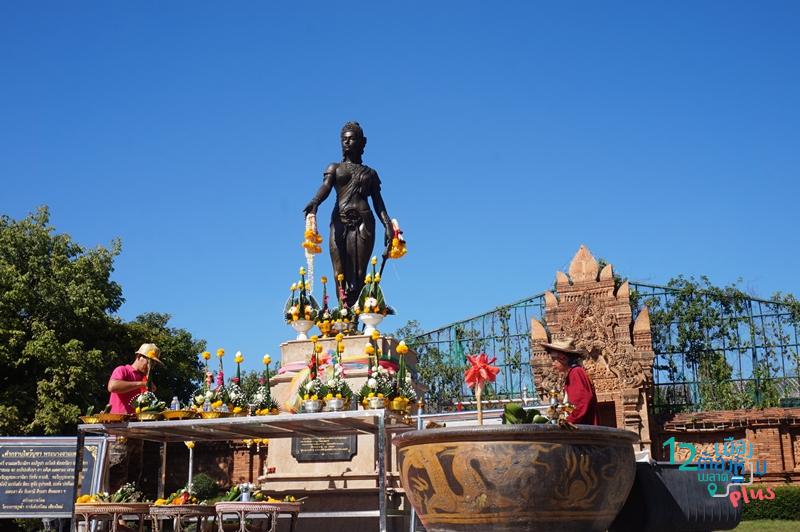
A visit to the Camadevi Monument can be read as an introduction to this wider setting. Rather than viewing the statue in isolation, travelers can ask what it says about the way Lamphun remembers its origins. The answer is found not only in written history but also in ceremonies, temple compounds, devotional practices, and the continued use of Queen Camadevi’s name in public culture. This combination of living remembrance and historic landscape gives Lamphun a distinctive atmosphere.
For people comparing Chiang Mai Vacation Package options, Lamphun is best understood as a cultural extension of a Chiang Mai stay rather than as a duplicate of the larger city. Package descriptions may group the two destinations because of their regional proximity, but the experience of Lamphun depends on its own historical character. Travelers should look for arrangements that leave room for respectful temple visits and unhurried viewing, while avoiding assumptions that every package includes the same locations or amount of time.
How to Approach the Monument Thoughtfully
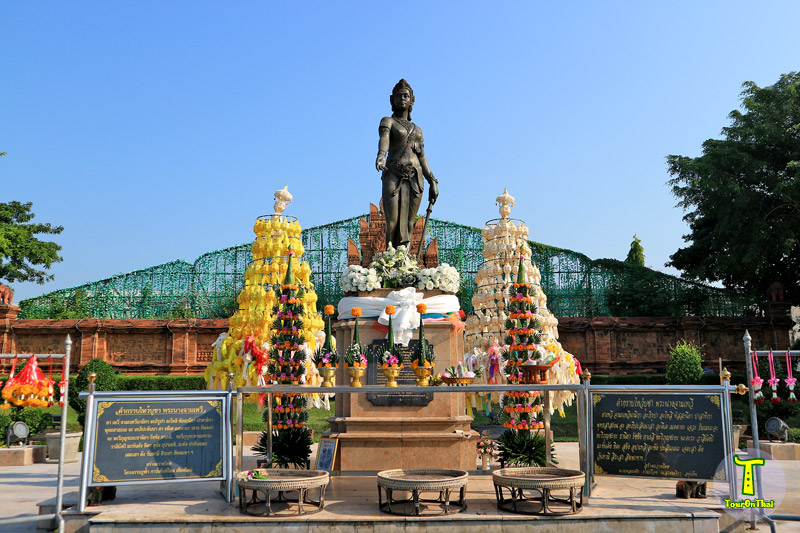
The monument rewards a calm, observant approach. Begin by noticing the setting, the posture and dress represented in the statue, and the way the memorial relates to its surrounding public space. These visual features communicate dignity and authority, but they should not be interpreted too literally without local or historical context. A guide, museum resource, or reliable local explanation can help distinguish symbolic representation from documented biography.
Visitors should also be attentive to local behavior. If people are paying respects, maintain a considerate distance and keep voices low. Clothing that is comfortable and reasonably modest is appropriate when a monument visit is combined with temple visits. Photography may be acceptable in an open public setting, but asking before photographing individuals or devotional activity is a courteous practice. The goal is not to perform a dramatic encounter with heritage, but to share a place that remains meaningful to the community.
The monument can also help travelers prepare for the layered nature of northern Thai history. Lamphun’s past includes different communities, religious traditions, artistic influences, and changing political relationships. Queen Camadevi’s story is one prominent thread in that fabric. Treating it as an invitation to learn, rather than as a complete explanation of the region, leads to a more balanced understanding.
Connecting a Monument Visit with Regional Travel
A regional travel plan does not need to be crowded to be rewarding. The Queen Cham Dhavi Monument can serve as a thematic starting point, followed by time to reflect on temples and older parts of Lamphun. This approach differs from collecting as many attractions as possible. It gives each place a role: the monument represents public remembrance, while temple compounds provide architectural, devotional, and artistic perspectives.
When considering Chiang Mai travel products, the phrase Chiang Mai Vacation Package can cover many different styles of travel, from broad sightseeing programs to flexible cultural excursions. Readers should examine descriptions carefully rather than assume that a package’s title guarantees particular inclusions. The most useful question is whether the travel arrangement supports the kind of experience desired. Cultural tourists may value a knowledgeable explanation and unhurried viewing more than a long list of stops.
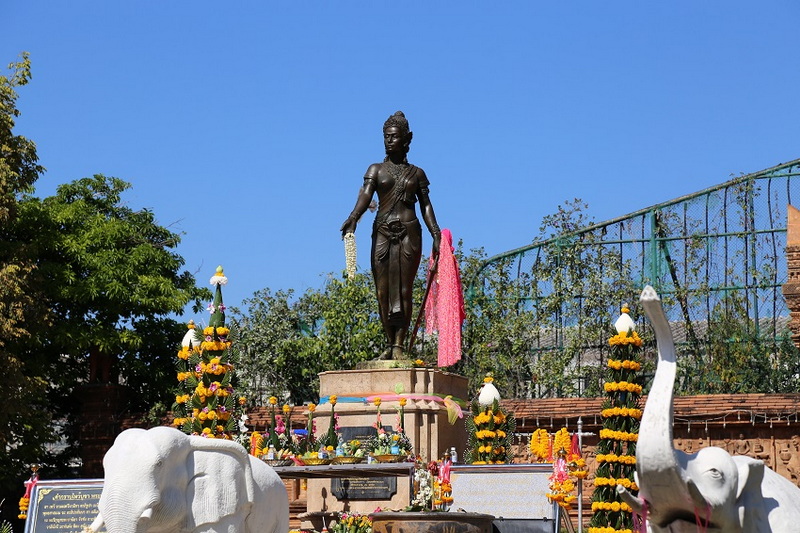
Lamphun is also suitable for visitors who prefer to make their own connections between places. A monument, a temple, and an old neighborhood can be considered together without requiring a detailed schedule in this article. Notice how religious buildings, civic spaces, local commerce, and historical names coexist. That ordinary continuity is part of the destination’s appeal and helps prevent heritage from becoming detached from present-day life.
Because the sites are culturally significant, travelers should avoid treating the area as a backdrop for careless behavior. Do not climb on structures, interfere with offerings, or assume that a quiet religious setting is available for loud group activity. These small choices protect the quality of the visit for residents as well as for other travelers.
What the Monument Reveals About Place and Memory
The enduring appeal of the Camadevi Monument lies in the relationship between a named person and a wider sense of place. Queen Camadevi is remembered not only as an individual but also as a symbol connected with Lamphun’s beginnings. This helps explain why the monument remains relevant even for visitors who are not specialists in archaeology or history. It offers a clear entry point into questions about how communities preserve identity across generations.
At the same time, the monument should not be expected to tell the whole story of Lamphun. Its role becomes clearer when viewed alongside sacred architecture, local traditions, and the continuing life of the city. Nearby temples add visual and spiritual dimensions, while the surrounding urban environment shows that heritage is not confined to an isolated archaeological display. Lamphun’s history is encountered through many modest details as well as through prominent landmarks.
For cultural travelers, this is the principal insight: a meaningful visit does not depend on discovering a dramatic spectacle. It can come from recognizing layers of memory, listening to careful explanations, and allowing a regional destination to speak in its own measured way. The monument provides a beginning, while Lamphun supplies the broader context needed to appreciate it.
Nearby Attractions
Wat San Pa Yang Luang
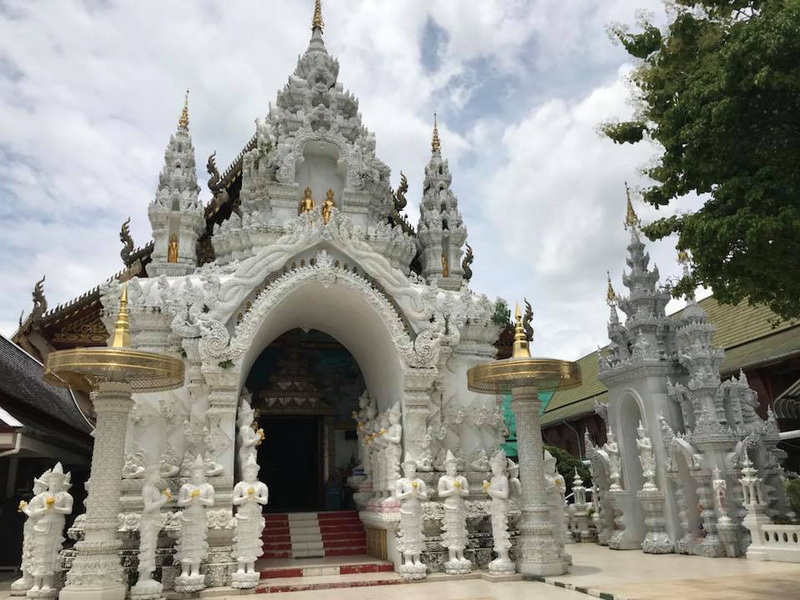
Wat San Pa Yang Luang complements a visit to the monument by shifting attention from public commemoration to temple architecture and religious practice. The temple is known for its artistic details and ornate decorative work, inviting visitors to look closely at craftsmanship rather than moving quickly through the grounds. Its atmosphere can help place Lamphun within the wider artistic traditions of northern Thailand.
As at other active temples, visitors should dress respectfully, follow posted guidance, and be mindful of worshippers. The value of including Wat San Pa Yang Luang is not simply that it adds another stop. It offers a different way to encounter local heritage, showing how history and devotion remain connected in a functioning religious environment.
Wat Chamadevi
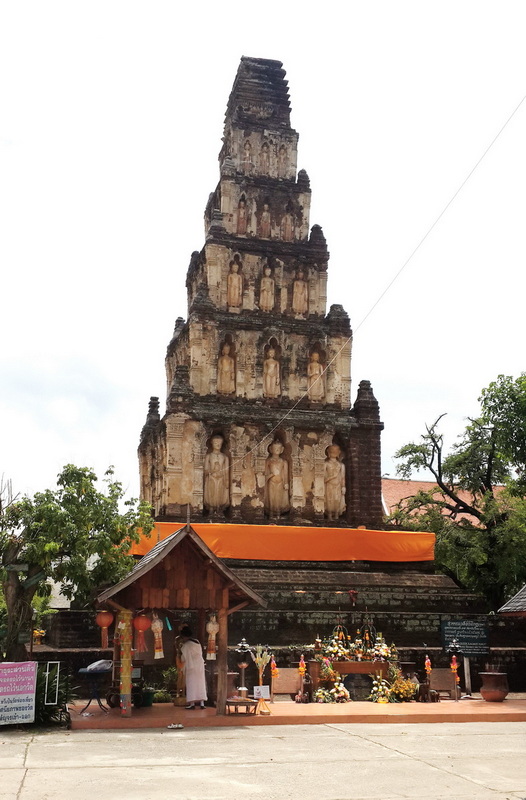
Wat Chamadevi is particularly relevant to travelers interested in the historical setting associated with Queen Chamadevi. The temple is recognized for its old religious structures and for the Ku Kut, or Mahaphon, chedi, an important example of the region’s distinctive historic architectural heritage. Its presence gives visitors a stronger sense of the age and cultural depth surrounding Lamphun.
The temple should be approached as a sacred and historic place rather than as a monument viewed only for its appearance. Take time to observe the brickwork, proportions, and devotional atmosphere, while remembering that architectural interpretation can benefit from a qualified guide or reliable local source. Together, Wat Chamadevi and the Camadevi Monument create a useful connection between the queen’s remembered legacy and Lamphun’s tangible religious landscape.
Why This Place Stays With You
The Camadevi Monument offers a concise but meaningful introduction to Queen Camadevi and the historical identity of Lamphun. Its significance becomes richer when paired with the region’s temples, respectful observation, and an awareness that tradition and documented history can overlap without being identical. Whether Lamphun is visited independently or considered within a Chiang Mai Vacation Package, the destination deserves more than a hurried checkmark. The monument, Wat San Pa Yang Luang, and Wat Chamadevi together encourage travelers to see northern heritage as a living relationship between place, memory, faith, and community.

No comments:
Post a Comment