Wat Phra That Hariphunchai and the Architectural Heritage of Lamphun
A respectful architectural guide to one of Lamphun’s most important living religious landmarks
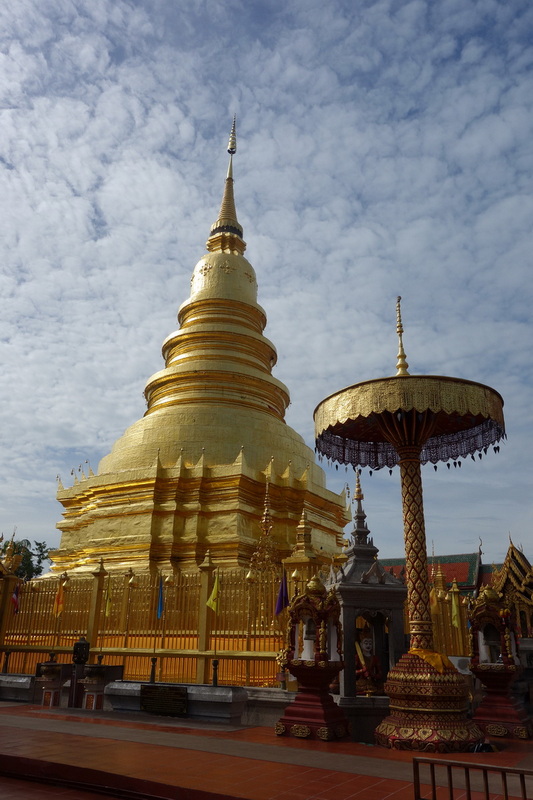
Among the Best Temples In Northern Thailand, Wat Phra That Hariphunchai stands out not only for its religious importance but also for the way its architecture expresses the long cultural history of Lamphun. The temple occupies a central place in the old city, where heritage, daily devotion, and urban life remain closely connected. Known formally as Phra That Haripunchai Woramahawihan Temple, the complex is associated with Hariphunchai, the historic Mon kingdom that flourished in the Lamphun area before the expansion of Lanna influence. Its principal stupa, devotional images, halls, gates, and surrounding details invite visitors to look beyond a single landmark and consider how a temple functions as a continuing cultural space. For travelers exploring Lamphun Thailand Attractions, the most rewarding approach is observant and unhurried. Rather than treating the site as a backdrop for photographs, visitors can notice the layered forms, watch the rhythm of worship, and place the temple within Lamphun’s wider network of historic monuments.
A Landmark Shaped by Hariphunchai and Lanna Heritage
The identity of Phrathat Hariphunchai is rooted in the history of Lamphun, one of northern Thailand’s oldest urban centers. Hariphunchai traditions are strongly connected with Mon cultural heritage, while later periods brought Lanna artistic and religious influences. The temple therefore offers an especially useful setting for understanding how northern Thai sacred architecture developed through continuity, adaptation, and restoration.
At the heart of the complex is the principal chedi, traditionally revered as a reliquary monument. Its elevated golden appearance gives the temple a clear visual focus, but its significance is not simply decorative. For Buddhist devotees, the stupa represents a place of veneration and merit-making. Its presence also reflects the importance of relic monuments in the religious landscape of northern Thailand, where pilgrimage and local identity have often grown around sacred stupas.
The temple should be read as an ensemble rather than as one isolated structure. Rooflines, finials, columns, guardian figures, decorative surfaces, and courtyards create a sequence of visual transitions. Some elements may appear highly ornate, while others are more restrained. Together they show how religious buildings communicate reverence through proportion, elevation, symbolism, and carefully framed movement.
What to Notice Inside the Temple Grounds
A first walk through Wat Phrathat Hariphunchai can be approached almost like a study in architectural layers. Begin with the relationship between the entrance and the central chedi. Gateways establish a threshold between the active streets of Lamphun and the more concentrated devotional space inside. From there, the arrangement of buildings guides the eye toward the principal sacred focus while allowing smaller shrines and halls to contribute to the overall character.
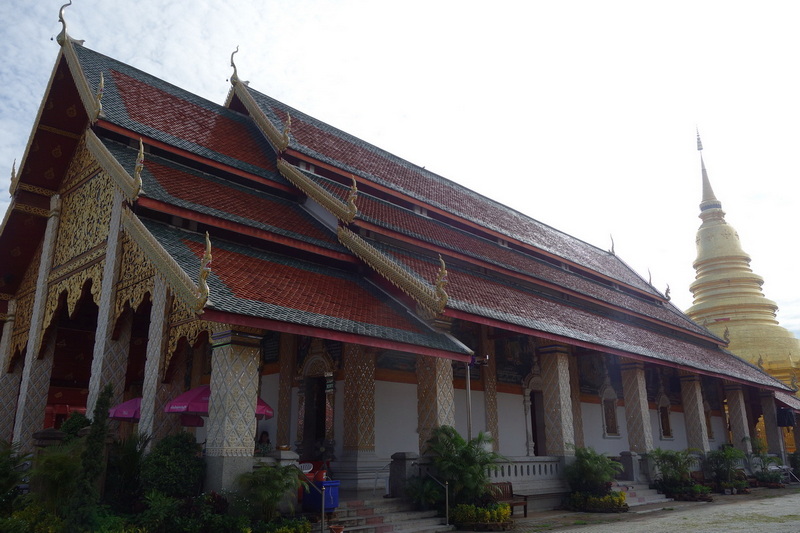
The roof architecture deserves close attention. Multiple roof tiers, projecting edges, and ornamental details are characteristic features of northern Thai religious design, although individual buildings may reflect different periods and influences. The repeated geometry is balanced by sculptural and decorative accents. Looking upward can reveal details that are easy to miss when attention remains fixed on the central stupa.
Murals, images, and symbolic objects should be viewed with sensitivity. They are not merely decorative exhibits; they belong to a living religious environment. A visitor may see people making offerings, lighting incense, praying, or quietly circling a sacred object. These activities are part of the temple’s present life, not staged demonstrations for sightseeing. Standing aside, lowering one’s voice, and observing before taking photographs helps preserve the dignity of the setting.
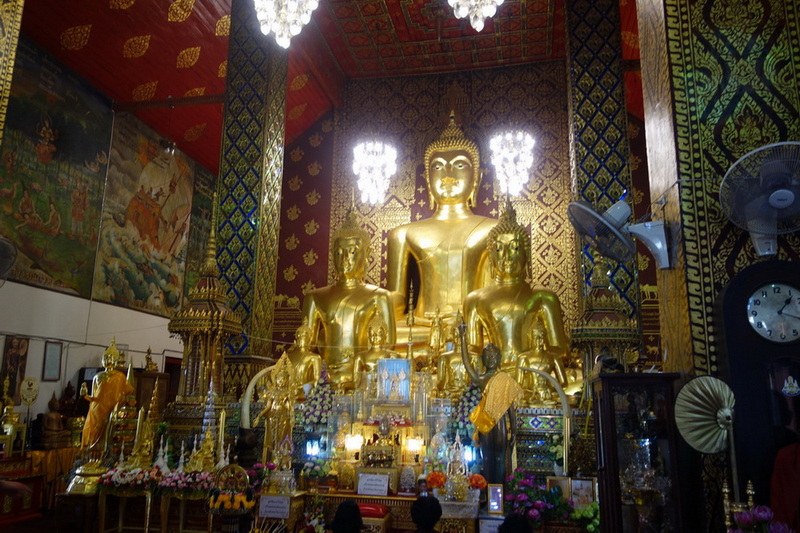
The complex also rewards attention to materials and surfaces. Gold-colored ornament, painted wood, stucco, masonry, and weathered details may occur together, revealing the ongoing care required to maintain a major temple. Signs of age are not necessarily flaws to be overlooked. They can show how a historic religious site remains active through repair, renewal, and continued community use.
Experiencing Hariphunchai Temple with Respect
The visitor experience at Hariphunchai Temple is shaped by its dual role as heritage site and place of worship. Travelers may arrive with an interest in architecture, history, or photography, while local worshippers may be visiting for prayer, offerings, or an important personal occasion. Both purposes exist within the same space, so respectful behavior is essential.
Modest clothing is appropriate, particularly when entering worship halls or approaching especially sacred areas. Clothing that covers shoulders and knees is a considerate choice, and shoes may need to be removed before entering certain buildings. Visitors should follow posted guidance and observe what others are doing rather than assuming that every area is open for casual exploration.
Photography is best treated as secondary to observation. Ask permission before photographing people, avoid interrupting ceremonies, and do not position yourself in front of worshippers. Images of revered statues or ritual activities may carry meanings that are not immediately apparent to an outside visitor. A calm manner allows the temple to be experienced as a cultural and spiritual place rather than as a collection of visual attractions.
The temple’s atmosphere can change during religious observances and local celebrations. Even without knowing the details of a particular event, travelers can recognize that gatherings may involve processions, offerings, chanting, or communal acts of devotion. The appropriate response is patience and attentiveness. Visitors do not need to participate in rituals to appreciate their importance, but they should make room for those who do.
The Temple within Lamphun’s Cultural Landscape
Phra That Hariphunchai Woramahawihan Temple helps explain why Lamphun is more than a short stop between larger northern cities. The town’s heritage is concentrated in a compact historical setting, where monuments, religious institutions, and older urban patterns preserve memories of Hariphunchai and later Lanna development. The temple provides a central point from which to understand that wider landscape.
For visitors comparing Lamphun Thailand Attractions, the value of this area lies in the relationship between places rather than in a checklist of isolated sights. A visit to the main temple introduces the importance of the sacred stupa tradition. Other nearby monuments add different perspectives, including older architectural remains, local devotional practices, and connections with Lamphun’s historical figures. This makes the city especially suitable for travelers who prefer cultural context over hurried sightseeing.
The surrounding streets also offer a useful transition between formal heritage and everyday life. Small businesses, residential areas, and ordinary movement continue around the temple precinct. That coexistence is significant: the site is not a preserved stage separated from the community, but part of a living town. Observing this connection can make the visit more meaningful while encouraging visitors to move carefully and respectfully through the area.
Those interested in northern architecture may find it helpful to compare repeated motifs across Lamphun’s temples. Similar roof forms, guardian imagery, ornamental patterns, and approaches to sacred space may appear in different combinations. Such comparisons can reveal both shared regional traditions and the distinct identity of each temple.
How to Look, Pause, and Understand
A thoughtful visit does not require an elaborate schedule. Allowing enough time to walk slowly, sit quietly where appropriate, and revisit the central chedi from different viewpoints can reveal more than moving rapidly from one building to the next. Early attention to the layout is useful: identify the principal sacred focus, note the halls around it, and then look for smaller details that explain how the complex is used.
Visitors who are unfamiliar with Buddhist temple etiquette can rely on a few simple principles. Dress modestly, speak quietly, avoid pointing feet toward sacred images, and step aside when worshippers are making offerings or moving through a ritual space. Do not climb on structures or touch religious objects unless clearly invited to do so. These gestures are small, but they show awareness that the temple belongs to a continuing community of faith.
The most memorable aspect of Wat Hariphunchai may not be one ornament or viewpoint. It is the combination of monumentality and ordinary devotion: the imposing chedi, the layered buildings, the sound and movement of worship, and the calm presence of a historic temple within a modern town. That combination gives the site its architectural depth and cultural force.
For travelers seeking notable temples in northern Thailand, the temple offers a balanced experience of visual study and cultural reflection. It is possible to appreciate its design while remaining aware that the buildings are not museum objects. Their meaning is renewed whenever people gather, pray, maintain the grounds, and pass traditions to the next generation.
Nearby Attractions
Wat San Pa Yang Luang
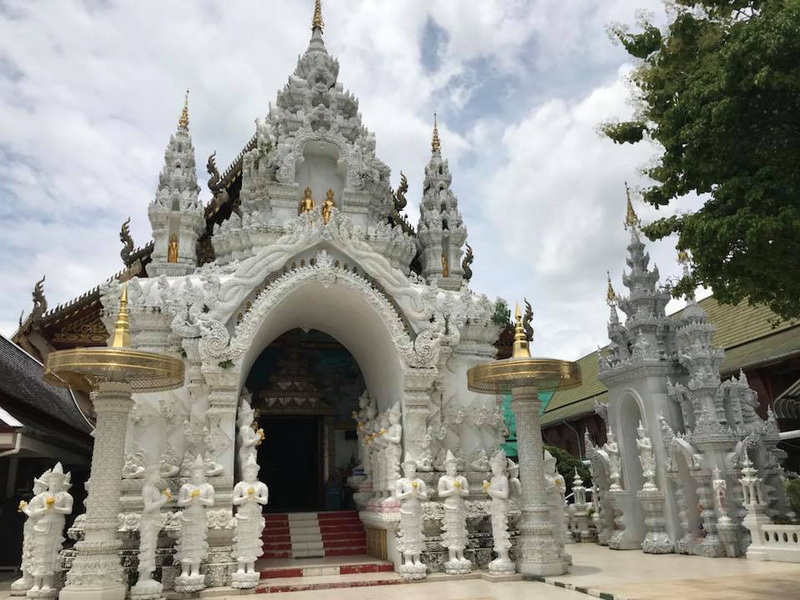
Wat San Pa Yang Luang adds another layer to a Lamphun temple visit through its distinctive religious architecture and connection with the region’s long Buddhist tradition. The grounds offer an opportunity to observe how a different temple complex organizes sacred buildings, decorative features, and spaces for worship. Comparing it with Wat Phra That Hariphunchai can encourage attention to variations in roof design, ornament, scale, and atmosphere rather than treating every temple as visually identical.
As at any active religious site, visitors should allow worshippers priority and follow local etiquette. The value of including Wat San Pa Yang Luang in a cultural itinerary is its ability to broaden the architectural picture of Lamphun while keeping the focus on living heritage.
Wat Chamadevi
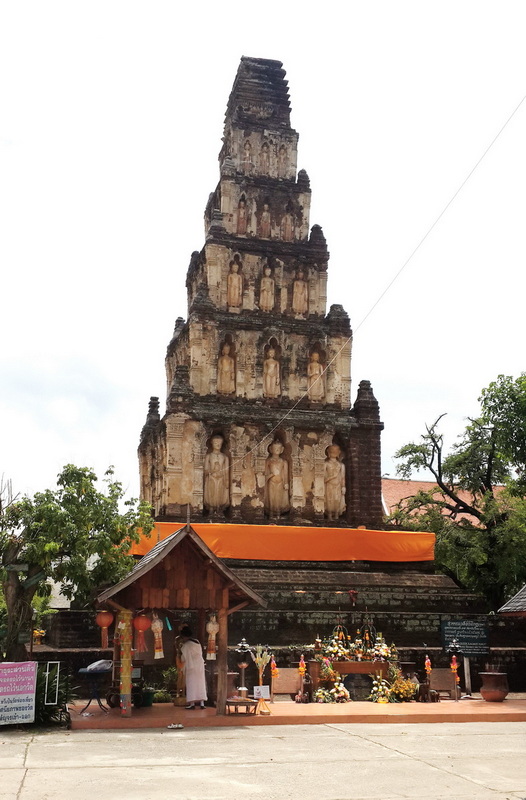
Wat Chamadevi is closely associated with Lamphun’s early history and is particularly important for visitors interested in the city’s Hariphunchai heritage. Its historic stupa, commonly recognized for its stepped form and rows of sculptural figures, presents a different architectural expression from the prominent golden chedi of Phrathat Hariphunchai. The contrast helps show that Lamphun’s religious landscape developed through multiple visual languages and historical periods.
The temple also provides cultural context for understanding the enduring memory of Queen Chamadevi, a central figure in local historical tradition. Visitors can approach the site as a place of reverence and heritage, taking time to observe its masonry, proportions, and devotional setting without reducing its significance to a single legend or photograph.
Why This Place Stays With You
Wat Phra That Hariphunchai brings together sacred tradition, architectural layering, and the continuing identity of Lamphun. Its chedi is an important focal point, but the wider complex reveals just as much through its halls, thresholds, decorative details, and daily devotional life. Paired with Wat San Pa Yang Luang and Wat Chamadevi, the visit becomes a richer exploration of Hariphunchai heritage. The most respectful way to experience this temple is to look carefully, move gently, and remember that its beauty is inseparable from the community and faith that keep it alive.
